AION 2 Consumables & Materials: Potions to Gathering
Published 2026-09-295 min read
AION 2's consumables and materials explained — potion and scroll tiers, buff foods, Essence Extraction gathering rules, and the five crafting tables.

Consumables are the quiet half of AION 2's power curve: the right scroll and the right food are free stats, and every one of them starts as a material you pulled out of the ground. Here's the full chain — gather, craft, consume.
The Consumable Families
- Potions — instant and over-time recovery. Healing Potions and the Life line (Potion, Serum, Brew, Crystal) restore HP; Mana and Wind Serums handle resources and movement. Superior versions of each sit above the standard grades.
- Food & Drink — pre-fight stat buffs. Teas and juices (Coriolus, Mela, Morfa), cooked dishes from Airon Fried Meat up to the Draconic Special line, each with an Artisan's crafted tier above the base version.
- Scrolls — combat buffs with three grade tiers (standard, Superior, Ultimate): Courage, Critical Hit, Critical Hit Resist, Speed, Absorption, Benediction, Tailwind and Impact-type Resist. Raid-ready kits run a full scroll loadout.
Essence Extraction: How Gathering Works
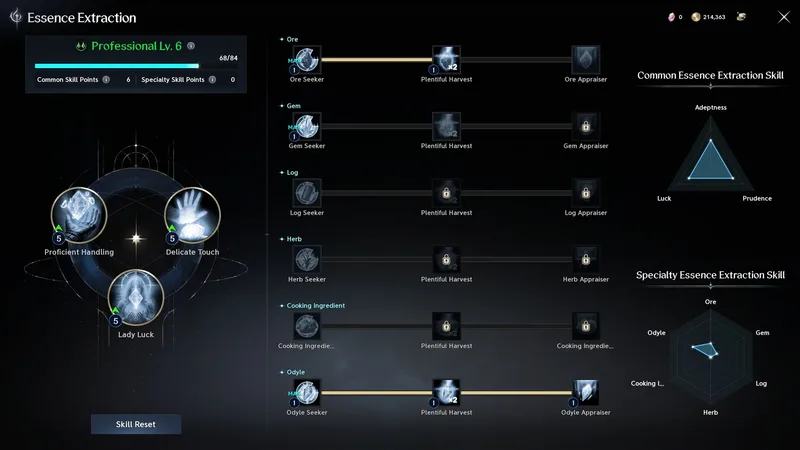
All gathering lives under one skill, Essence Extraction, covering minerals, gems, wood, herbs, cooking ingredients and the floating green Odyle orbs. Walk up, press the Gathering prompt, and watch two bars race — blue success against red failure. Each node allows three attempts, the segment is spent whether you stay or quit, and failed attempts still pay XP — so always let the bar play out.
Levels award skill points: one Common point per level, one Specialty point per ten. Common points feed the three process skills — Proficient Handling, Delicate Touch, Lady Luck; Specialty points deepen the six material tracks (Ore, Gem, Log, Herb, Cooking Ingredient, Odyle). Materials come in three qualities: Standard, Fine, Pure — and a high grade in one material makes every other material easier to gather.
The Five Crafting Tables
Main cities host five tables, each with its own leveling proficiency: Alchemy, Blacksmithing, Armorsmithing, Handicrafting and Cooking. The pattern is always the same — gathered materials plus a catalyst bought from the vendor next to the table for Kinah: two gathered Orichalcum Ores plus a vendor's Orichalcum Solvent, for example, become an Orichalcum Ingot. Crafts can fail and eat the materials, and higher proficiency means better odds and better outputs.
Alchemy alone produces the consumable shelf — serums, potions, scrolls, manastones and soulstones — while Blacksmithing's Orichalcum line runs from ingots up through Expert's-tier weapons. Well-rolled crafted gear rivals dungeon drops, which is why crafted pieces also feed the Supply Requests and the Substance Morph conversion loop.
Where Surplus Materials Go
Everything you hoard has a buyer: Substance Morph turns materials into rarer ones (Pure and Radiant ores need Blacksmithing proficiency), and the Abyss Supply Request window exchanges crafted goods, boss drops and gathered stacks for Abyss Points on daily, weekly and season-length contracts — a favourite of players who'd rather farm AP without PvP.